Concrete Supply Planning for Rural Construction Sites
2nd Jul, 2026
Key Risks Contractors Should Prepare For
Concrete supply planning is one of the most important steps contractors can take before starting a rural construction project. On remote or rural sites, concrete is not only a material requirement. It affects scheduling, labour productivity, equipment use, site access, quality control and overall project delivery.
For rural civil contractors, construction business owners, mining site operators, ready-mix expansion buyers and growing SME contractors, the question is not only: “Who is our concrete supplier?” The better question is: “Will our concrete supply plan still work when the site is far from town, roads are difficult, weather changes and delivery timing becomes unpredictable?”
This is where proper planning becomes essential.
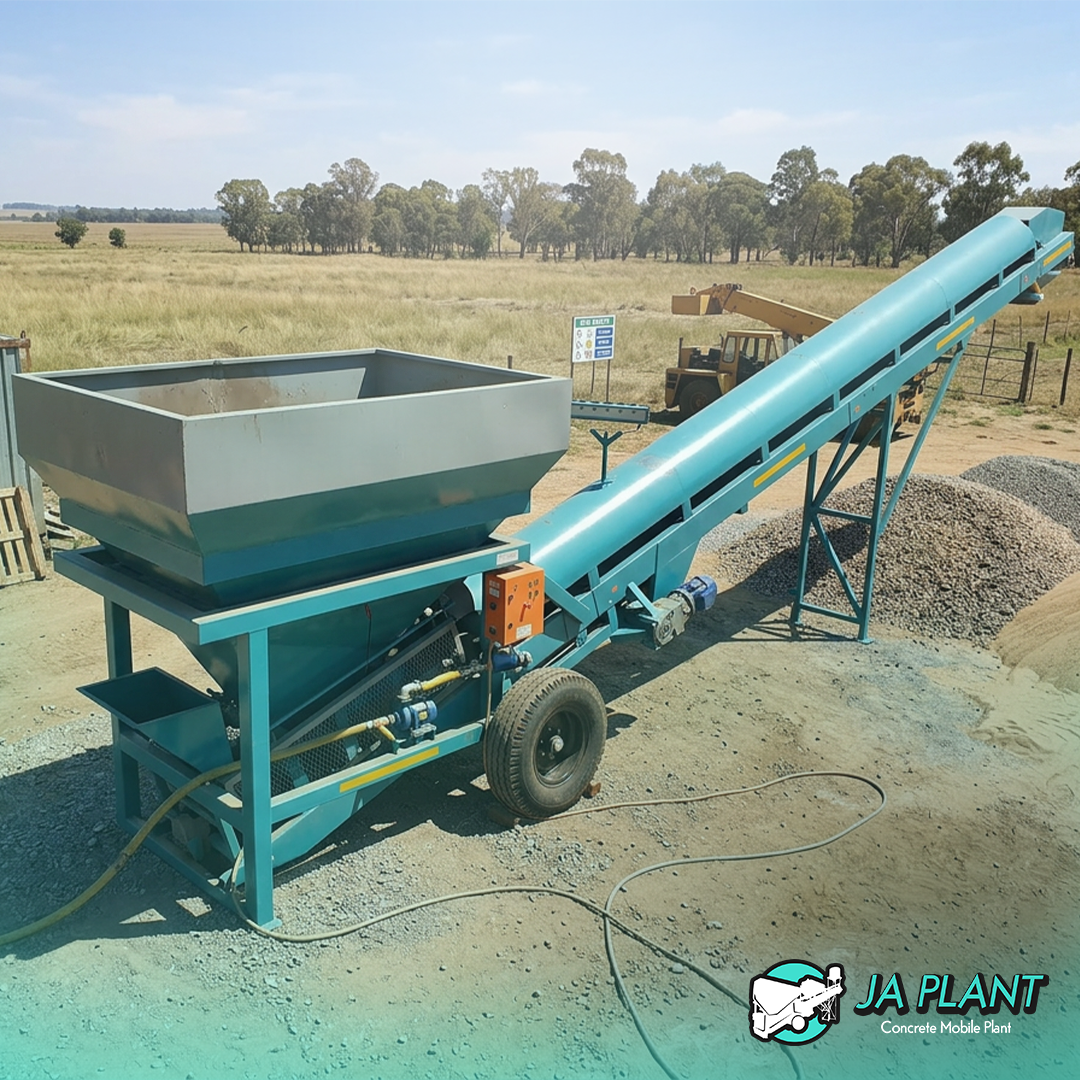
JA Plant works with contractors and construction businesses that need more control over concrete production, especially on rural, remote and demanding sites. With mobile batching plant solutions designed for practical site-based production, JA Plant helps contractors think beyond basic supply and plan for how concrete will be produced, moved and managed before the project starts.
In this article, we look at the key risks contractors should prepare for when planning concrete supply on rural construction sites, and where a mobile batching plant may support better control over production.
Why Rural Concrete Supply Needs to Be Planned Before Site Starts
Rural construction sites operate differently from urban sites. In a city or large town, a concrete supplier may be close enough to support regular deliveries. Access routes may be easier, alternative suppliers may be available, and emergency adjustments may be simpler to manage.
On rural construction sites, there is often less room for error.
A site may be far from the nearest concrete supplier. Access roads may be gravel, damaged, narrow or affected by rain. Workfronts may move as the project progresses. Water and power may need to be planned separately. Fuel cost and transport distance may affect delivery practicality.
If concrete is delayed, the whole site can lose momentum.
This is why concrete supply planning should happen before mobilisation. Contractors need to understand:
-
Where the concrete will come from
-
How far it needs to travel
-
Whether ready-mix delivery is practical
-
How much concrete will be needed
-
How often concrete will be required
-
Whether the workfront will move
-
What site access conditions look like
-
Whether water, power or fuel support is available
-
What happens if delivery is delayed
For many rural civil projects, the concrete supply plan is not a small operational detail. It can directly affect project timelines, labour productivity and cost control.
Fuel Cost and the Transport Risk in South Africa
Fuel cost is an important external factor in South African construction planning. While it should not be the centre of every concrete supply decision, it is highly relevant when rural sites depend on long-distance delivery.
When a concrete supplier is far from the site, transport becomes a bigger part of the total supply picture. Delivery trucks need to travel further, often across difficult roads or low-speed routes. If multiple pours are required over several weeks or months, repeated delivery trips can add pressure to both cost and scheduling.
For contractors, fuel cost can influence:
-
Transport charges from suppliers
-
Plant and equipment movement costs
-
Aggregate, cement and material delivery costs
-
Site vehicle and support equipment operating costs
-
The cost of delays caused by repeated trips
-
The practicality of servicing remote workfronts
This does not mean ready-mix is always the wrong choice. In some locations, a ready-mix concrete supplier may be practical and efficient. However, on rural or remote sites, contractors should calculate the real cost of distance, transport and repeated delivery dependency.
JA Plant’s mobile batching plant solutions are relevant where contractors need to reduce dependency on long-distance concrete delivery and produce concrete closer to the workfront. The value is not only in owning equipment. It is in improving control over production where distance, repeated demand and delivery timing make external supply less practical.
Weather Delays and Changing Site Conditions
Weather is another major risk in rural construction planning. Rain, heat, wind, mud and seasonal changes can all affect how concrete supply is managed.
On rural sites, weather not only affects the pour itself. It can affect the road to site, the condition of access points, the movement of trucks, the availability of materials and the ability to keep the programme on track.
Poor weather can create several concrete supply challenges:
-
Delivery trucks may struggle to reach site
-
Gravel roads may become difficult or unsafe
-
Pour schedules may need to be changed
-
Site teams may wait for concrete that cannot arrive on time
-
Workfronts may become inaccessible
-
Material handling may become more difficult
-
Water management may require more planning
For rural civil contractors, weather planning should form part of the concrete supply plan from the start. It is not enough to know that a supplier can deliver under normal conditions. Contractors also need to ask whether the supply plan can handle delays, access disruptions and changing site conditions.
A mobile batching plant may help support better planning where the contractor has repeated concrete requirements and wants to produce closer to the point of use. By reducing reliance on external delivery windows, contractors may have more flexibility to manage production around site conditions.
Bad Roads and Difficult Delivery Routes
Bad roads are one of the most practical challenges in rural construction. A project may look straightforward on paper, but the delivery route can quickly create problems.
Ready-mix trucks, cement delivery vehicles, aggregate suppliers and support vehicles all depend on access. If the road is narrow, uneven, muddy, steep or poorly maintained, concrete delivery can become slower and less reliable.
This matters because concrete supply is time-sensitive. If trucks are delayed, the site may experience interruptions that affect labour, equipment and scheduled work.
Bad roads can lead to:
-
Longer travel times
-
More difficult delivery scheduling
-
Increased wear on vehicles and equipment
-
Higher transport risk
-
Missed pour windows
-
Delayed workfront progress
-
Greater dependency on supplier availability
For mining, industrial and rural civil sites, access planning should happen early. Contractors should assess the road conditions between the concrete supplier and the site, not only the conditions on the site itself.
JA Plant supports contractors who need practical site-based concrete production in demanding environments. For projects where delivery routes create recurring risk, a mobile batching plant can help shift part of the production process closer to the workfront, supporting better control over timing and availability.
Distance from Suppliers and the Hidden Cost of Waiting
One of the biggest risks in rural concrete supply planning is distance from the nearest concrete supplier.
When a supplier is far away, delays become harder to manage. A late truck cannot always be replaced quickly. A missed delivery window can affect the rest of the day’s work. If the site is working on a tight programme, even small delays can create knock-on effects.
The hidden cost of waiting for concrete can include:
-
Labour standing idle
-
Equipment not being used productively
-
Supervisors losing planned work time
-
Pour teams needing to reschedule
-
Subcontractors being delayed
-
Project milestones being pushed out
-
Increased pressure on the next workday
For construction business owners and managing directors, these delays are not only site frustrations. They are commercial risks. Labour, equipment and project overheads continue even when concrete does not arrive as planned.
This is why concrete supply planning should look beyond the price per cube. Contractors should consider the full cost of delayed supply, including lost productivity and schedule disruption.
Where a project has repeated concrete demand, site-based production may be worth considering. JA Plant’s mobile batching plants are designed for contractors who need to improve control over concrete production where supplier distance, delivery delays or repeated pours make external supply less practical.
When Ready-Mix Is Available but Not Practical
A concrete supplier may be available in the broader area, but that does not always mean ready-mix is practical for a rural construction site.
This is an important distinction.
Availability means a supplier exists. Practicality means the supplier can reliably support the project’s location, access route, pour timing, volume requirements and workfront movement.
Ready-mix may become less practical when:
-
The site is far from the batching source
-
Roads make delivery slow or difficult
-
Pour timing is difficult to control
-
The project needs smaller but repeated pours
-
The workfront moves across a long route
-
Delivery slots are limited
-
Weather affects access
-
The cost of waiting becomes too high
This does not mean contractors should avoid ready-mix completely. Ready-mix can still be the right solution for many projects. The key is to assess whether it is practical for the specific rural site.
For some projects, the stronger option may be to use on-site concrete production. JA Plant helps contractors explore mobile batching plant solutions that can support rural, remote and infrastructure projects where concrete needs to be produced closer to where it is required.
Water, Power and Site Setup Requirements
Concrete supply planning is not only about the concrete supplier. Rural projects also need to plan the site conditions that support production.
Before the project starts, contractors should consider whether the site has reliable access to:
-
Water
-
Power
-
Fuel
-
Aggregates
-
Cement
-
Plant placement areas
-
Safe truck access
-
Storage space
-
Operator access
-
Maintenance support
Water access is especially important for concrete production and site operations. If water is not readily available, the contractor may need to plan water storage, water transport or supporting equipment before production begins.
Power and fuel also need to be considered. A site may require generators, diesel support or other equipment to keep operations moving. This is especially relevant for mining sites, remote civil projects, roadworks and water infrastructure projects.
JA Plant’s wider product and support offering is useful in this context because rural concrete supply often requires more than a batching plant alone. Contractors may also need support equipment, parts, repairs, calibration and practical guidance to keep production moving.
Moving Workfronts and Repeated Concrete Demand
Many rural civil projects are not fixed in one place. Roadworks, bridges, culverts, crossings, drainage, stormwater systems and water infrastructure projects often involve moving workfronts.
This creates another concrete supply planning challenge.
A supplier may be practical for one section of the project but less practical as the workfront moves further away. Delivery routes may change. Access may become more difficult. Pour requirements may vary from one section to the next.
Moving workfronts can affect:
-
Delivery timing
-
Truck access
-
Concrete placement planning
-
Labour scheduling
-
Equipment positioning
-
Material supply
-
Site supervision
-
Productivity across multiple areas
For contractors handling repeated concrete demand across rural sites, the ability to produce concrete closer to the workfront can become a meaningful advantage.
JA Plant’s mobile batching plants are relevant for contractors who need flexible site-based concrete production. Instead of depending only on concrete delivery from a fixed external point, contractors can explore whether a mobile batching solution could support the movement and demands of the project.
Project Mobilisation Risk: Planning Before the Team Arrives
Concrete supply should be part of project mobilisation planning, not a last-minute decision.
Before the site team arrives, contractors should already understand how concrete will be supplied, who is responsible, what equipment is needed and what risks must be managed.
Poor mobilisation planning can lead to:
-
Delayed first pours
-
Unclear supplier responsibilities
-
Missing water or power arrangements
-
Poor plant placement
-
Incomplete access planning
-
Unplanned material delivery issues
-
Confusion around production capacity
-
Delays in getting the site operational
This is especially important for scaling SME contractors moving into larger projects. A project may require more concrete, more consistency and more planning than previous work. Without a stronger concrete supply plan, the business may struggle to keep up with site demands.
JA Plant can support contractors at this decision stage by helping them think through the practical requirements of mobile batching, site conditions and production needs. For many businesses, the first step is not immediately buying equipment. It is understanding whether a mobile batching plant makes sense for the project.
Support, Maintenance and Plant Readiness
For existing plant owners, concrete supply planning also includes maintenance and plant readiness.
A batching plant that is not ready before production starts can create delays just as serious as supplier delays. Plant owners should check key components, calibration, wear parts, water systems, load cells, indicators and general operating condition before site mobilisation.
Plant readiness is especially important where the site is remote. If a breakdown happens far from support services, downtime can become costly.
Contractors should consider:
-
Is the batching plant ready for production?
-
Are replacement parts available?
-
Has calibration been checked?
-
Are water and weighing systems working correctly?
-
Are operators familiar with the plant?
-
Is there support available if something goes wrong?
-
Should repairs or refurbishment be done before the project starts?
JA Plant supports customers beyond the initial plant sale through parts, repairs, refurbishment, calibration and technical support. This is valuable for contractors and plant owners who need to keep concrete production reliable throughout the project.
Where a Mobile Batching Plant Fits Into Rural Site Planning
A mobile batching plant is not always required for every rural construction site. However, it becomes worth considering when concrete supply risk starts affecting project planning, productivity or control.
A mobile batching plant may be practical when:
-
The site is far from ready-mix suppliers
-
Concrete demand is repeated across the project
-
Delivery timing is difficult to manage
-
Workfronts move over time
-
The project needs better control over production
-
Ready-mix is available but not practical
-
Labour and equipment downtime are becoming costly
-
The contractor wants more independence over concrete supply
-
The project is in a rural, mining, industrial or infrastructure environment
JA Plant’s mobile batching plants are designed to support contractors who need practical concrete production capability on demanding sites. They help contractors produce concrete closer to where it is needed, reduce dependency on external delivery schedules and improve planning control where the project justifies site-based batching.
Explore our mobile batching plant solutions
What Contractors Should Consider Before the Project Starts
Before starting a rural construction project, contractors should review their concrete supply plan carefully. A practical checklist can help reduce risk before mobilisation.
Concrete Supply Planning Checklist
Ask the following questions before the site starts:
-
How far is the site from the nearest concrete supplier?
-
Is ready-mix delivery practical for this site?
-
What are the road and access conditions?
-
How could weather affect delivery and site access?
-
How will fuel cost and transport distance affect supply planning?
-
How much concrete will the project need?
-
Will concrete demand be once-off or repeated?
-
Will the workfront move during the project?
-
Is there reliable water access?
-
Is there reliable power or fuel support?
-
Where would a mobile batching plant be positioned?
-
What production output is required?
-
What support equipment may be needed?
-
Are parts, repairs or calibration required before production?
-
Who will manage concrete production on site?
-
What happens if external supply is delayed?
Answering these questions early can help contractors make better decisions about whether to rely on a concrete supplier, use ready-mix, produce concrete on site or explore a mobile batching plant solution with JA Plant.
Prepare Your Rural Site with JA Plant
Concrete supply planning is critical for rural construction sites. Fuel cost, supplier distance, bad roads, weather conditions, moving workfronts, water access and site setup can all influence whether a concrete supply plan works in practice.
For contractors, the goal is not only to find a concrete supplier. The goal is to build a practical supply plan that supports the project from the first pour to the final workfront.
JA Plant helps contractors, plant owners, mining operations, ready-mix businesses and growing construction companies improve control over concrete production with locally built and supported mobile batching plant solutions.
If your next rural project depends on reliable concrete supply, speak to JA Plant before the site starts.
Prepare with JA Plant today. Explore mobile batching plant solutions or contact the team for practical guidance on your site requirements