On-Site Concrete for Rural Civil Construction
1st May, 2026
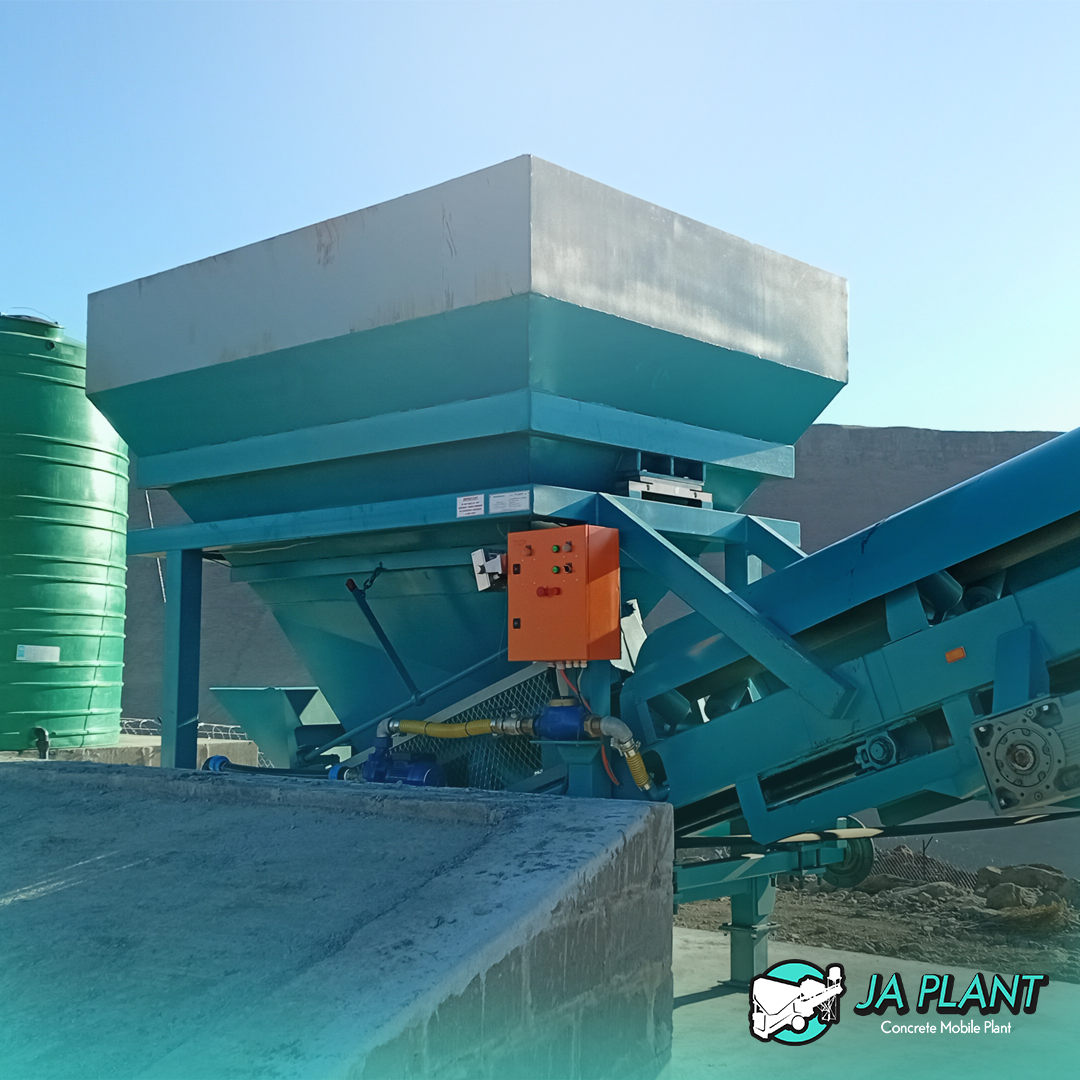
Rural civil construction projects do not operate under the same conditions as urban builds. Site access is different. Supply chains are less predictable. Distances are longer. Delays are harder to absorb.
And when concrete is needed repeatedly across a remote project, relying entirely on external supply can quickly become a serious operational weakness.
This is why more contractors involved in rural civil works are looking closely at on-site concrete production.
The issue is not simply whether concrete can be delivered. In many cases, it can. The real question is whether that supply model gives the contractor enough control over programme, quality, timing, and cost to keep the project moving efficiently.
For projects involving drainage, culverts, water infrastructure, foundations, retaining structures, and other recurring concrete works, producing concrete on site can offer a far more practical approach. It reduces dependence on outside delivery schedules, improves responsiveness on site, and supports better control over daily operations.
For rural civil contractors, this is where a mobile batching plant becomes more than just equipment. It becomes part of the project delivery strategy.
What Is Rural Civil Construction?
Rural civil construction refers to infrastructure and structural works carried out outside major urban and industrial centres. These projects are often located in remote, outlying, or logistically difficult areas where access to support services is limited.
Typical rural civil construction projects include:
-
drainage and stormwater infrastructure
-
culverts and crossings
-
bridge approaches and small bridge works
-
canals and water channels
-
reservoirs and water storage structures
-
pump stations
-
sanitation infrastructure
-
foundations and structural concrete works
-
road-related civil infrastructure
-
retaining walls and support structures
These are not one-off concrete jobs. Many rural civil projects require consistent concrete production over time, often across changing work fronts and under difficult site conditions.
That is what makes the concrete supply strategy so important.
Challenges of Concrete Supply in Rural Projects
Concrete supply in rural construction environments is rarely as straightforward as it looks on paper.
In urban projects, a contractor may have relatively easy access to commercial ready-mix plants, shorter lead times, and more flexibility if a pour needs to be rescheduled. Rural projects usually do not have that advantage.
Instead, contractors often face a combination of challenges that make conventional supply more difficult to manage.
Distance from ready-mix suppliers
The further the site is from a batching source, the harder it becomes to manage consistent delivery timing. Long travel distances create pressure on scheduling and reduce flexibility during active pours.
Greater risk of delays
Rural logistics are more exposed to access limitations, route conditions, traffic disruptions, and delivery coordination problems. A delayed load not only affects one truck. It can disrupt labour, equipment, sequencing, and productivity across the site.
Reduced control over the daily programme
When a contractor depends on off-site supply, production becomes partly dependent on someone else’s timetable. That makes it harder to adjust quickly when site priorities change.
Inconsistent supply response
Remote and rural projects often require practical responsiveness. When supply must be ordered, dispatched, and transported over long distances, short-notice changes become more difficult to manage.
Higher operational inefficiency
If crews, pumps, or equipment are standing by waiting for concrete, the cost of delay goes beyond material costs. Labour time, plant utilisation, and programme momentum are all affected.
For rural civil contractors, these are not minor inconveniences. They are recurring project risks.
Why Traditional Ready-Mix Falls Short
Ready-mix concrete remains a valuable supply model in many environments. It is widely used and often works well where sites are close to established batching infrastructure. But rural civil construction creates a different set of demands.
The problem is not that ready-mix is inherently unsuitable. The problem is that the operating model behind ready-mix is often not aligned with remote site realities.
A rural project may involve:
-
repeated concrete requirements over an extended period
-
work taking place far from commercial plants
-
changing programme priorities
-
multiple small or medium pours across different areas
-
conditions where timing matters as much as volume
Under these circumstances, outsourced concrete supply can become restrictive.
The contractor has less flexibility. The margin for delay becomes smaller. The cost of missed timing becomes higher. And the ability to respond to actual site conditions becomes weaker.
This is where many civil contractors begin to reassess their approach. Rather than asking whether outside supply is available, they start asking whether it is practical enough for how the project actually runs.
That is a much more useful question.
What Is On-Site Concrete Production?
On-site concrete production is exactly what it sounds like: producing concrete at or near the project location rather than depending entirely on externally delivered ready-mix.
Instead of waiting for concrete to arrive from an off-site supplier, the contractor batches concrete directly on site using dedicated equipment. In the context of rural civil works, this is commonly achieved with a mobile batching plant.
This approach gives the contractor more direct control over:
-
production timing
-
batching availability
-
pour scheduling
-
response to site changes
-
continuity of concrete-related work
For projects with recurring concrete demand, this can significantly improve coordination.
It also changes the role of concrete in the project. Instead of being a delivery dependency, concrete becomes an operational resource the contractor can manage more directly.
That shift matters, especially in remote environments where delay recovery is more difficult and supplier dependence carries more risk.
When Does It Make Financial and Operational Sense?
A mobile batching plant is not the right answer for every contractor or every project. The best decision always depends on the nature of the work, the frequency of concrete use, and the site environment.
But for rural civil construction, on-site concrete production begins to make strong financial and operational sense when several conditions are present.
1. The project is far from established concrete supply
When concrete has to travel long distances to reach the site, the supply becomes more vulnerable to delay and harder to control. Producing on-site reduces that dependency.
2. Concrete demand is ongoing, not occasional
If the project requires repeated pours for culverts, drainage, foundations, channels, or structural works, batching on site becomes more commercially sensible than treating each pour as a separate external delivery exercise.
3. Delays have high knock-on costs
Where labour, subcontractors, pumps, or site equipment are affected by delayed concrete, the real cost is not limited to the material. Lost time and interrupted workflow often create a much larger financial impact.
4. The contractor needs tighter programme control
Rural projects often require practical flexibility. When site conditions shift, access changes, or work sequencing is adjusted, having control over concrete production can support a better response on site.
5. The work may move across locations
Mobile batching plants are well-suited to contractors operating across changing project zones or moving from one rural site to the next. The mobility factor becomes especially relevant where permanent infrastructure commitment does not make sense.
In these scenarios, the value proposition is clear. On-site production is not only about making concrete. It is about reducing uncertainty and improving control over how the project runs.
Key Use Cases in Rural Civil Construction
Not every project uses concrete in the same way, but several rural civil applications consistently create a strong case for on-site batching.
Drainage works
Drainage infrastructure often requires repeated concrete production across multiple points on site. Delays in supply can affect progress across a broader section of the project.
Culverts and crossings
Culvert construction typically forms part of ongoing civil works rather than isolated pours. Reliable access to concrete helps maintain programme continuity and reduce waiting time.
Water infrastructure
Reservoirs, pump stations, canals, and related structures require dependable concrete production under conditions where external supply may be less practical.
Foundations and structural support works
Rural sites often include a mix of structural elements that need concrete at different stages. Producing on-site can support better sequencing and reduce dependence on outside scheduling.
Retaining structures and support walls
Where repeated concrete work is required across challenging terrain or distributed locations, on-site batching provides a more flexible production model.
Road-related civil infrastructure
Even where the road contractor is not primarily producing concrete pavement, there may still be recurring demand for barriers, drainage, culverts, support structures, and related concrete works. In those situations, on-site production can make strong sense.
These use cases are important because they move the conversation away from the batching plant as a general product and toward the project problems it helps solve.
Mobile Batching Plants Explained
A mobile batching plant is a concrete production system designed for transportability and practical use on site. Unlike a static plant, which is installed as a more permanent setup, a mobile batching plant is built to support project-based work where relocation, setup speed, and operational flexibility matter.
For rural civil contractors, that matters for several reasons.
First, it allows concrete production to be positioned close to where the work is actually happening. That helps reduce dependence on long external delivery routes.
Second, it supports contractors who operate across multiple project locations rather than from a single permanent production base.
Third, it aligns with the reality of civil construction, where project conditions change and equipment often needs to move with the work.
This is where JA Plant’s positioning becomes relevant. JA Plant focuses on mobile batching solutions built for practical on-site concrete production. That makes the fit particularly strong for contractors working in rural and remote environments where mobility, reliability, and operational control are not optional extras. They are part of what keeps the project moving.
The value is not simply that the plant is mobile. The value is that mobility supports a more practical construction model.
Cost vs Control: A Practical Comparison
One of the biggest mistakes contractors make is evaluating concrete supply only in terms of direct purchase price.
The more useful comparison is cost versus control.
On paper, outsourced supply may appear simpler because the contractor is not operating the batching equipment directly. But on remote civil projects, the hidden costs of dependency can be significant.
These may include:
-
Waiting time for labour and equipment
-
Interrupted pours or sequencing issues
-
Reduced flexibility when schedules change
-
transport-related inefficiencies
-
disruption caused by delayed or inconsistent deliveries
-
difficulty coordinating repeated pours across the project
By contrast, on-site concrete production can improve control over:
-
When concrete is produced
-
How are the pours scheduled
-
How site teams sequence work
-
how quickly project changes can be accommodated
-
How consistently does concrete-related work progress
This does not mean on-site batching is automatically cheaper in every case. It means the contractor must look at the full operational picture.
In rural civil construction, the ability to control supply often has real cost value. A contractor with better control over timing and coordination is usually in a stronger position to manage productivity, protect programme delivery, and reduce avoidable disruption.
That is why the decision should not be framed as equipment versus no equipment. It should be framed as whether the current supply model gives the project enough control.
Who Should Consider This Approach?
On-site concrete production is especially worth considering for contractors whose work includes the following combination:
-
rural or remote project locations
-
recurring concrete demand
-
infrastructure or structural civil works
-
reliance on dependable site scheduling
-
limited practical access to ready-mix supply
-
a need to reduce supply-related delays and improve operational independence
This may include:
-
Rural civil infrastructure contractors
-
Water and sanitation contractors
-
Drainage and culvert contractors
-
Remote project contractors
-
Civil firms working across multiple regional sites
-
Contractors managing long-duration infrastructure programmes
The stronger the need for repeated concrete production and site control, the stronger the case becomes.
Conclusion
Rural civil construction projects place unique demands on concrete supply. Distance, access, timing, logistics, and programme control all become more difficult when the site is far from established infrastructure and dependent on external delivery.
That is why on-site concrete production is becoming a more practical option for many contractors operating in these environments.
A mobile batching plant is not simply a piece of equipment added to the site. In the right project context, it is a way to improve control, reduce supply dependence, and support more reliable project execution.
For contractors building drainage systems, culverts, water infrastructure, structural supports, and other recurring concrete works in rural areas, the question is no longer just whether concrete can be delivered.
The better question is whether your current concrete supply model is helping the project move efficiently, or holding it back.
If your projects require dependable concrete production in remote or rural environments, JA Plant offers mobile batching solutions designed to support practical, on-site operation where control matters most.
Need a more reliable way to produce concrete for rural civil projects? Contact JA Plant to discuss a mobile batching solution suited to your site conditions and project demands.