The cost of concrete delays on remote construction sites
1st Aug, 2026
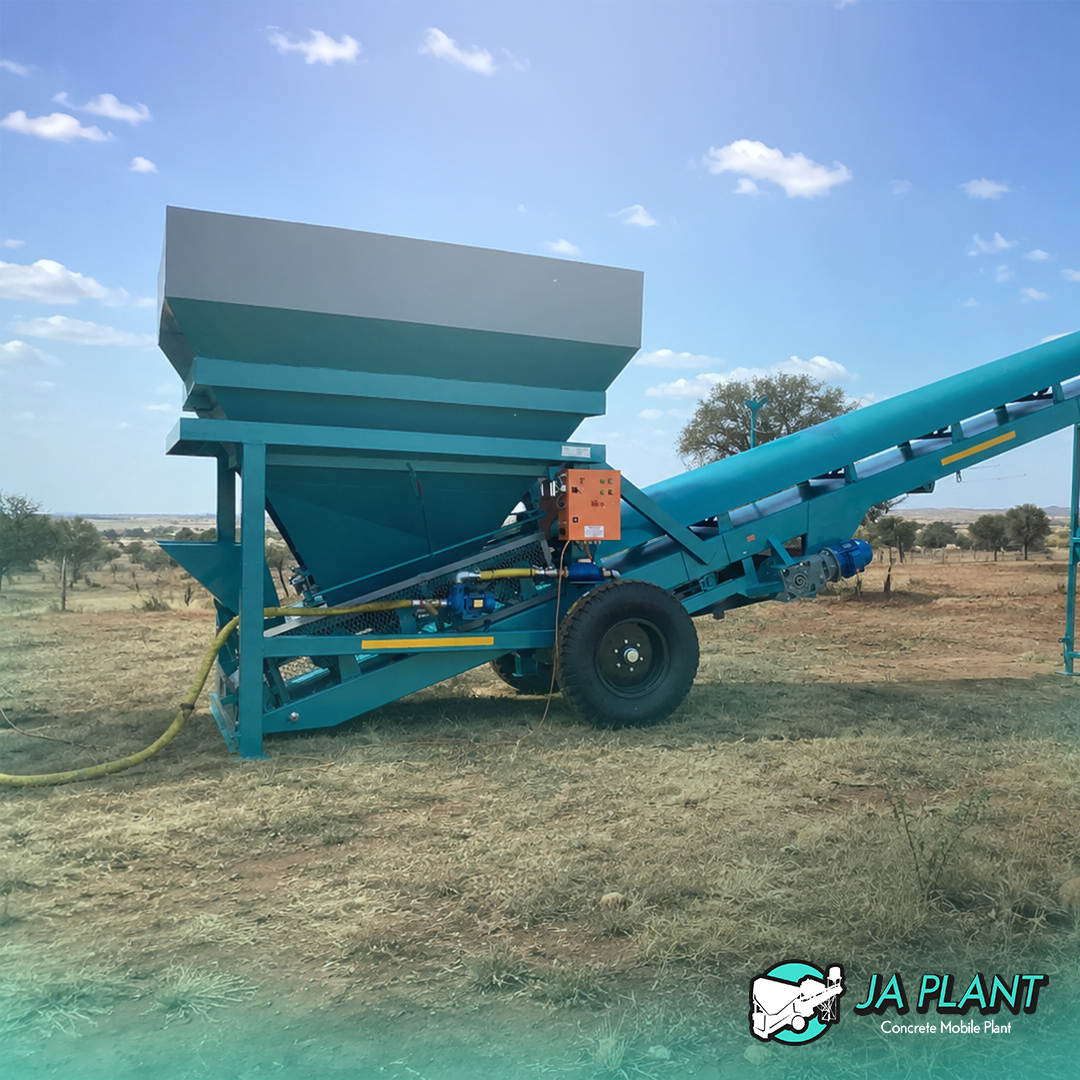
Concrete delays on remote construction sites cost more than time. When a site team is ready, equipment is in position, and the pour is scheduled, a late concrete delivery can affect the entire day’s productivity.
For contractors working on rural roads, bridges, culverts, drainage systems, reservoirs, mining sites or remote infrastructure projects, concrete supply is not only a material requirement. It is part of the project programme. When concrete does not arrive when planned, labour can stand idle, equipment can sit unused, pour schedules can be interrupted, and project managers may need to reorganise work around a delay they cannot fully control.
This is why concrete delays should be seen as a project risk, not just a supply issue.
JA Plant works with contractors, plant owners, mining operators and construction businesses that need better control over concrete production on demanding sites.
Through mobile batching plant solutions and practical site-based batching support, JA Plant helps contractors think beyond delivery dependency and consider when on-site concrete production may be a better fit for remote construction projects.
Why Concrete Delays Are More Serious on Remote Sites
Concrete delays can affect any construction project, but the impact is often greater on remote sites.
On an urban project, a contractor may have several concrete suppliers nearby. If one delivery is late, there may be more flexibility to adjust the programme, source from another supplier or recover lost time more easily. On a remote construction site, that flexibility is often limited.
Remote sites may be far from the nearest concrete supplier. Delivery routes may include gravel roads, poor access points, long travel distances or changing weather conditions. If a truck is delayed, the replacement supply may not be available quickly. If a pour is interrupted, the site team may have fewer options to recover the schedule.
This is why remote concrete supply needs to be planned carefully. Contractors need to understand not only whether concrete can be supplied, but whether it can be supplied reliably, repeatedly and at the right time.
On remote sites, one delayed delivery can affect:
-
Labour productivity
-
Equipment utilisation
-
Pour timing
-
Subcontractor schedules
-
Site supervision
-
Workfront progress
-
Project milestones
-
Overall site control
The real cost of concrete delays is therefore not limited to the price of the concrete. It is the cost of what happens around the concrete when the supply does not arrive as planned.
Labour Standing Time: When Teams Are Ready, but Concrete Is Not
One of the most immediate costs of concrete delays is labour standing time.
Before a pour begins, workers may already be on site.
The area may be prepared.
Formwork may be ready.
Reinforcement may be checked.
Supervisors may have scheduled the team around that pour.
If the concrete does not arrive on time, those workers may have limited productive work to move on to.
This is especially difficult on remote sites where work is often planned around specific access, weather and delivery windows. A delayed pour can leave the team waiting, even though the contractor is still carrying the labour cost.
Labour standing time can affect:
-
Site workers are waiting for concrete to arrive
-
Supervisors managing downtime instead of production
-
Subcontractors are losing productive hours
-
Teams have to return later for the same task
-
Follow-up work is being delayed because the pour was not completed
For construction business owners and project managers, this creates a commercial problem. The team is paid for the day, but the planned output is not achieved. When this happens repeatedly, concrete delays can start affecting project profitability.
The concern is not only that the concrete is late. The concern is that the site loses productive momentum while waiting for something that should have been part of the day’s planned workflow.
Equipment Idle Time: The Cost of Machines Not Working
Equipment idle time is another major cost of concrete delays on remote construction sites.
Construction equipment is expensive to own, operate, maintain or hire. When equipment is booked for a specific task, the contractor needs it to be productive. If concrete is delayed, machinery may stand on site without contributing to output.
Depending on the project, this may include:
-
Concrete pumps
-
Loaders
-
Mixers
-
Trucks
-
Cranes
-
Compaction equipment
-
Site support vehicles
-
Other plant and machinery linked to the pour
Whether the equipment is owned or hired, standing time still has a cost. Hired equipment may continue to accumulate charges. Owned equipment may still require operators, fuel, maintenance and allocation across the project. If equipment is needed elsewhere, a concrete delay can also disrupt the wider site schedule.
On remote projects, equipment planning is even more important because moving machinery between work fronts takes time. If the equipment is positioned for a pour that does not happen as planned, the contractor may lose valuable production time that cannot be recovered easily.
Concrete delays can turn productive equipment into standing costs. This is one reason why contractors should assess whether their concrete supply model gives them enough control over production timing.
Rescheduling and Programme Disruption
Concrete delays not only affect the hour or day of the delay. They can affect the entire project programme.
Many construction tasks depend on concrete being placed at the right time. If a pour is delayed, the work that follows may also need to move. This can affect inspections, formwork removal, curing time, follow-up trades, site access and the next phase of construction.
For remote construction sites, rescheduling can be complicated. Teams may already be working around limited access routes, long travel distances, site accommodation, weather conditions or project deadlines. When concrete delivery becomes uncertain, project managers may need to reshuffle resources and adjust the programme at short notice.
Rescheduling can create pressure in several ways:
-
Crews may need to be moved to other tasks
-
Subcontractors may need to return later
-
Equipment may need to be reallocated
-
Follow-up work may be pushed back
-
Site supervisors may spend time solving supply problems
-
The project timeline may become harder to control
A delayed pour can also create communication challenges. The project manager may need to update the client, subcontractors, suppliers and internal teams. This takes time and adds pressure to a site that may already be operating under tight delivery conditions.
For contractors, the issue is not only the delay itself. It is the disruption that follows.
Pour Interruptions and Concrete Supply Uncertainty
Another major concern is our interruption.
In some cases, the concrete may arrive, but not consistently enough to keep the pour running smoothly. There may be long gaps between deliveries, uncertainty around the next truck or changes in the delivery schedule during the day.
This can create pressure for the site team, especially when the pour needs to be completed within a specific window. On remote sites, supply uncertainty is more difficult to manage because trucks may be travelling long distances, road conditions may vary, and backup supply may not be close enough to respond quickly.
Pour interruptions can affect:
-
Site productivity
-
Team coordination
-
Work sequencing
-
Finishing schedules
-
Concrete placement planning
-
Confidence in the supply plan
A concrete supplier may be available, but availability does not always mean the supply is practical for the project’s location, timing and workfront conditions. This is an important distinction for remote construction projects.
Contractors should ask whether external supply can support the project consistently, not only whether a supplier exists in the broader area.
Delivery Distance and the Risk of Depending on External Supply
Delivery distance is one of the biggest factors behind concrete delays on remote construction sites.
The further the site is from the concrete supplier, the more risk is introduced into the delivery process. Longer routes mean more exposure to traffic, road conditions, weather, vehicle delays and scheduling uncertainty. On rural or remote roads, even a small issue can affect delivery timing.
Long-distance delivery can create challenges such as:
-
Longer travel times
-
More difficult delivery planning
-
Delays caused by poor access roads
-
Higher pressure on truck availability
-
Less flexibility if the first delivery is late
-
Fewer backup options
-
More dependence on supplier scheduling
For some projects, ready-mix supply may still be practical. For others, distance and access may make it harder to rely only on external concrete delivery.
This is where contractors should compare mobile batching and ready-mix supply carefully. The decision should not be based only on the material price. It should also consider delivery timing, repeated demand, site access, distance from suppliers and the cost of waiting when concrete is late.
For remote projects where delivery dependency creates repeated delays, on-site concrete production may become worth considering.
The Cost of Lost Momentum on Remote Construction Sites
Concrete delays also create a cost that is harder to measure but very real: lost site momentum.
Construction sites depend on flow.
Teams plan the day around tasks that need to happen in sequence.
Equipment is moved into position.
Labour is assigned.
Supervisors coordinate workfronts.
Suppliers and subcontractors are scheduled around expected progress.
When concrete is delayed, that rhythm is interrupted.
The site may not stop completely, but it loses control over the day’s planned output. Instead of executing the programme, the team starts reacting to the delay. Supervisors spend time making calls, adjusting work, reorganising people and managing frustration.
Lost momentum can affect:
-
Daily production targets
-
Team morale
-
Site coordination
-
Workfront progress
-
Client confidence
-
Programme discipline
-
The contractor’s ability to plan the next stage
On remote construction sites, where access and timing are already more difficult, lost momentum can have a bigger impact. A delayed pour may mean a missed opportunity to complete work before weather changes, equipment moves or the next workfront needs attention.
Concrete delays cost more than time. They cost control.
When On-Site Concrete Production Becomes Worth Considering
On-site concrete production is not required for every project. However, it becomes worth considering when concrete delays begin affecting productivity, planning and site control.
For remote construction sites, a mobile batching plant may be practical when the project has repeated concrete demand and external supply is difficult to manage. Instead of relying only on long-distance delivery from a fixed supplier, contractors can produce concrete closer to where it is needed.
On-site concrete production may become relevant when:
-
The site is far from ready-mix suppliers
-
Concrete delivery is regularly delayed
-
Workfronts move across the project
-
The project requires repeated pours
-
Labour and equipment downtime are becoming costly
-
Delivery windows are difficult to control
-
The contractor needs more independence over supply timing
-
Ready-mix is available but not practical for the site conditions
JA Plant’s mobile batching plants are designed to support contractors who need practical concrete production capability on remote, rural, mining, industrial and infrastructure sites. The goal is not to remove every possible project risk. The goal is to help contractors improve control over concrete production where distance, delivery uncertainty and repeated demand make external supply less practical.
How Mobile Batching Supports Better Concrete Supply Control
Mobile batching can support better concrete supply control by giving contractors more influence over when and where concrete is produced.
This is especially useful on remote projects where concrete demand is linked to moving workfronts, difficult access routes or tight construction windows. By producing concrete on or closer to the site, contractors may be able to reduce dependency on third-party delivery schedules and align production more closely with site readiness.
A mobile batching plant can support:
-
Site-based concrete production
-
More control over production timing
-
Better planning around labour and equipment
-
Reduced dependency on long-distance deliveries
-
Practical support for repeated concrete demand
-
More flexibility on the rural and remote work fronts
-
Improved concrete supply planning where ready-mix is difficult
For contractors comparing ready-mix and on-site batching, the question should be practical: which option gives the project the best balance of reliability, control, cost planning and production efficiency?
JA Plant helps contractors explore mobile batching plant solutions based on site requirements, project type, concrete demand and production needs. This allows buyers to make more informed decisions before committing to a supply model.
Planning Questions Contractors Should Ask Before the Next Pour
Before the next remote project or scheduled pour, contractors should review the concrete supply plan carefully.
The following questions can help identify whether concrete delays may become a project risk:
Supplier and Delivery Questions
-
How far is the site from the nearest concrete supplier?
-
How reliable are delivery times to this location?
-
What happens if a delivery truck is delayed?
-
Are there backup suppliers nearby?
-
Is ready-mix practical for the site’s distance and access conditions?
Labour and Equipment Questions
-
How much labour is affected if the concrete is late?
-
What equipment will be standing during the wait?
-
Is any hired equipment linked to the pour schedule?
-
Can the team move to other productive work if the pour is delayed?
-
How much site time is lost when delivery timing changes?
Project Planning Questions
-
How often will concrete be needed?
-
Will the work front move during the project?
-
Are multiple pours required over several weeks or months?
-
How much flexibility does the programme have?
-
What follow-up work depends on the pour being completed on time?
On-Site Production Questions
-
Would on-site concrete production improve control?
-
Is there enough space for a mobile batching plant?
-
Is water, power or fuel support available?
-
What concrete output does the project require?
-
Which JA Plant mobile batching plant option may suit the site?
These questions help contractors think beyond the concrete order and assess the wider impact of supply delays. They also help determine whether a mobile batching plant could support better project planning.
Why JA Plant Is Relevant for Remote Concrete Production
JA Plant supports contractors and plant owners who need practical solutions for concrete production on demanding sites.
For remote construction projects, the value of JA Plant’s offering is not only the equipment itself. It is the ability to help contractors think through site conditions, production needs, batching requirements and long-term support.
JA Plant’s relevance includes:
-
Mobile batching plant solutions for site-based production
-
Practical support for rural and remote construction environments
-
Locally built batching plant solutions
-
Product guidance for contractors comparing options
-
Support beyond the sale through parts, repairs and calibration
-
Solutions for contractors, mining operations, ready-mix businesses and growing construction companies
For buyers, this matters because a mobile batching plant is a high-value decision. Contractors need to understand not only the plant, but also how it fits into the project, how it supports production planning and what support is available after purchase.
JA Plant helps contractors move from uncertainty to a more informed conversation about concrete production control.
Concrete Delays Cost More Than Time
Concrete delays on remote construction sites can affect labour, equipment, scheduling, pour continuity and overall project control.
When a site team is waiting, equipment is standing, and the programme is shifting, the real cost of delayed concrete becomes much bigger than the material itself. Contractors should not only ask what the concrete costs per cube. They should ask what it costs when concrete arrives late, interrupts the pour or makes the day’s work harder to control.
For remote, rural, mining and infrastructure projects, on-site concrete production may be worth considering when external supply creates repeated delays or uncertainty.
JA Plant helps contractors explore mobile batching plant solutions that support better concrete production control on demanding sites.
If your site is remote, your workfronts are moving, or your team is losing time waiting for concrete, start a WhatsApp conversation with JA Plant.
Send your project details, site location and concrete production requirements, and speak to JA Plant about the right mobile batching solution for your project.